Transformation in Pig Farming: The Success Story of “La Huella”
An article by Facundo Javier Junghanss

The pig farming industry has significantly transformed in recent decades, driven by technological innovations and rising global demand for animal protein, particularly from China. Within this evolving landscape, the “La Huella” project stands out as a beacon of progress. Focused on establishing a front-line pig breeding facility with 220 sows, this initiative in Tomas Jofré, Mercedes district, Buenos Aires province, exemplifies high efficiency and advanced technology.
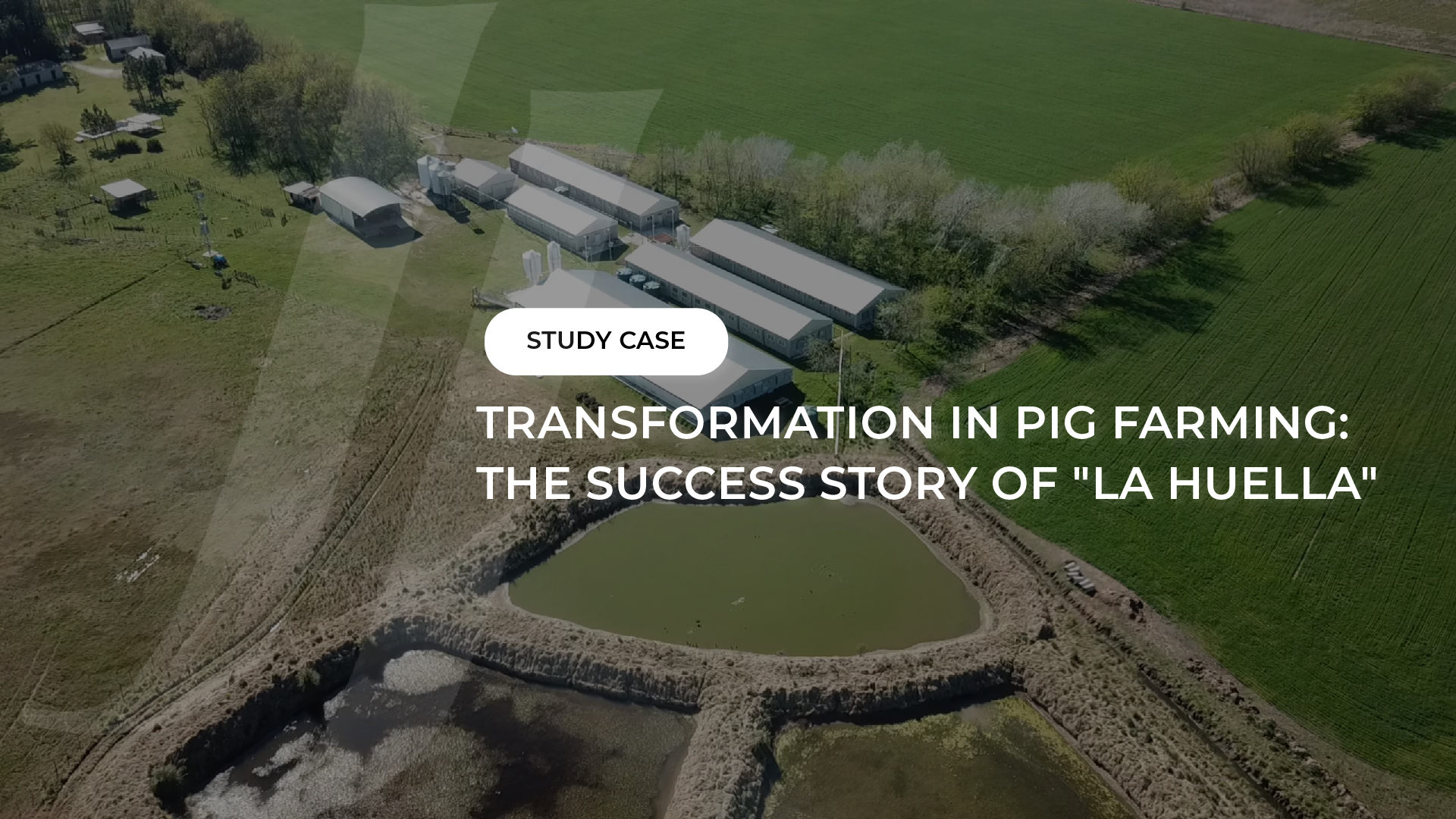
Launched in 2014, “La Huella” aimed to integrate state-of-the-art technologies into pig breeding and feeding processes. The primary challenge was to implement imported automated systems to overcome traditional limitations and meet the sophisticated demands of the breeding market.
Goals of the “La Huella” Project
The main purpose of this case study is to showcase the success and expertise gained in setting up an internationally recognized pig farming facility. The specific goals were:
- Implement Cutting-Edge Technologies: Integrating the latest advancements in pig farming.
- Ensure Environmental Sustainability: Adhering to rigorous sustainability standards and regulations.
- Enhance Animal Welfare: Ensuring optimal conditions for animal health and well-being.
- Boost Efficiency and Productivity: Maximizing operational effectiveness and output.
Strategic Approaches for Innovation in Pig Breeding
To achieve these objectives, we adopted a multidisciplinary approach:
- Research and Technological Development: Conducting an exhaustive analysis of global technologies, importing and adapting them to the Argentine production framework.
- Training and Development of Personnel: Organizing workshops and courses on the operation and maintenance of new equipment.
- Implementation of Advanced Technologies: Installing state-of-the-art equipment, including sensors for feeders, temperature, humidity, and ammonia concentration to maintain air quality. Piping systems to transport feed directly from the plant to each building, manure separators, continuous monitoring cameras, and musical systems for sows in maternity were also implemented.
- Continuous Monitoring and Evaluation: Establishing key performance indicators to assess operational and productive efficiency, with data collected and analyzed for ongoing improvement.
Globally, the pork industry has grown significantly. In 2021, the global pig population reached over 752 million, with China producing over 43 million metric tons of pork. The U.S. and the EU are also major contributors.
Impact of Technological Integration at “La Huella”
The results of our implementation were remarkable:
- Enhanced Productivity: Process automation significantly reduced feeding and cleaning times, increasing efficiency and decreasing labor requirements.
- Improved Animal Welfare: Advanced feeding systems provided instant feed to the 220 pregnant sows, reducing stress associated with feeding routines.
- Reduced Environmental Impact: The manure separation system decreased the amount of solids sent to aerobic and anaerobic lagoons, enabling water recycling for cleaning the facilities.
Conclusions
The experience at the “La Huella” facility underscores the importance and advantages of adopting advanced technologies in the pig farming industry. Key lessons learned include:
- Continuous Training for Personnel: Essential to fully leverage the benefits of advanced technologies.
- Constant Monitoring and Adaptation: Crucial for maintaining and enhancing operational efficiency.
- Animal Health and Welfare: Fundamental to achieving production goals and enhancing the quality of the final product.
J&J Group specializes in driving success through technological innovation and sustainable practices in agricultural projects. Reach out to us to discover how our expertise can elevate your investment portfolio.
About the Author
B.Sc. in Agricultural Management and Production (UADE) with experience and solid knowledge in agricultural systems, techniques and agribusiness strategies. Specialist in agricultural optimization and agroindustry management in Argentina and the region.
Linkedin